-
Before Enlightenment, Drink Tea and Clean Your Cup …
Before enlightenment, drink tea and clean your cup.
After enlightenment, share tea and clean the cups.It doesn’t mean that everyone who shares tea is enlightened, but sharing tea can be a wonderful and meaningful practice — perhaps even a simple way of getting a little closer to whatever enlightenment might actually mean for you.
Tea can be enjoyed alone. But something changes when we share it. A few leaves, some hot water, a few cups — and suddenly there is a reason to sit together, to listen, to talk, to give and receive.
If you think you need to achieve something in this life, become someone, or make your life better than it is right now, come and join us for a few cups of good tea.
If you think you already know the Truth, please come and join us for tea — and share some of your wisdom with us.
If enlightenment doesn’t interest you at all, that’s absolutely fine too. Come, relax with us and enjoy a few cups of tea.
If you are far too busy even to think about enlightenment, perhaps you have the best reason of all to come. Sit down for a little while. Put the phone away. The rest of the world will probably survive without you for an hour or two. Drink some tea with us.
If your head is too full, come and pause for a while. Slow down a little and empty your cup before you fill it again.
If your heart feels heavy, come and put it down for a while. We don’t promise to make it lighter, but you don’t have to carry it quite so tightly while drinking tea.
If you feel lonely, come and join us. Sometimes we don’t need to be fixed or entertained. Sometimes we simply need to share some time — and some tea — with other people.
If life feels good and your heart feels light, come too. Bring some of that light with you. Good things are worth sharing. And so is good tea.
If you have too many questions, bring them with you. We may not have the answers, but perhaps someone around the table has something worth hearing. And anyway, we will have tea.
If you have something to say, share it.
If you don’t, listen.
Silence can be shared too.If you like tea, come and enjoy some good quality Pu-erh with us.
If you don’t like tea, why not give it another chance? Perhaps you haven’t found the right tea yet — or perhaps tea tastes a little different when it is shared.
Come and meet people. Share a story, a thought, a laugh, a little silence — or simply a cup of tea.
Bring some light to the circle, or take some if you need it.
Maybe both.
Because this is not so much about the space we find between us.
It is about the space we create together.It is not about me.
It is not about you.
It is not even about the tea.It is about creating a space where, perhaps for a moment, we can remember that we were never really separate.
That’s all.
You are welcome anyway, anyhow.
As you are.
Because that is what matters.I am here if you wish to join.
And I am sharing some tea.And don’t worry — you won’t have to clean your cup at the end. 🙂
-
The Rituals
Why Ritual Still Matters in a World That Never Stops
There are fewer and fewer rituals in our lives.
We wake to an alarm, reach for our phones, rush through breakfast and move from one task to the next. Work follows us home. Our worries sit beside us at the table. One day quietly spills into another until weeks, months and even years seem to disappear.
And then, sometimes, we stop and wonder:
Where was I while my life was happening?
Modern life often treats ritual as something unnecessary—an old-fashioned custom, a superstition, or simply a waste of time. We have learned to value what can be measured, bought, sold or completed quickly. If something has no obvious practical purpose, we may struggle to justify giving it our time.
But ritual offers us something that efficiency cannot.
It creates a pause.
For a moment, it interrupts the constant movement of life and says:
Stop. You are here. This moment matters.
Ritual does not need to be religious, elaborate or mysterious. It does not require special clothing, complicated words or dozens of candles. It begins with intention: choosing to be fully present for something that might otherwise pass unnoticed.
Lighting a candle at the end of the day.
Sharing food without phones or distractions.
Making tea slowly and offering the first cup to someone you love.
Standing at the threshold of your home and consciously leaving the day’s burdens outside.
Welcoming a new life, honouring a commitment or saying a meaningful goodbye.These simple acts give shape to our lives. They mark the places where one moment ends and another begins. They help us recognise what is changing, what we are carrying and what we may be ready to release.
Without such pauses, life can begin to feel strangely flat. There may still be birthdays, weddings and holidays, but celebration becomes another item on the calendar. Transitions become little more than the passing of time. We grow older without always feeling that we have truly lived through the years.
Ritual brings depth back to the everyday.
Tea as a doorway into the present
Tea can be made in a hurry: a bag in a mug, boiling water, a quick sip while answering messages.
But the same cup of tea can become something entirely different when it is prepared with care.
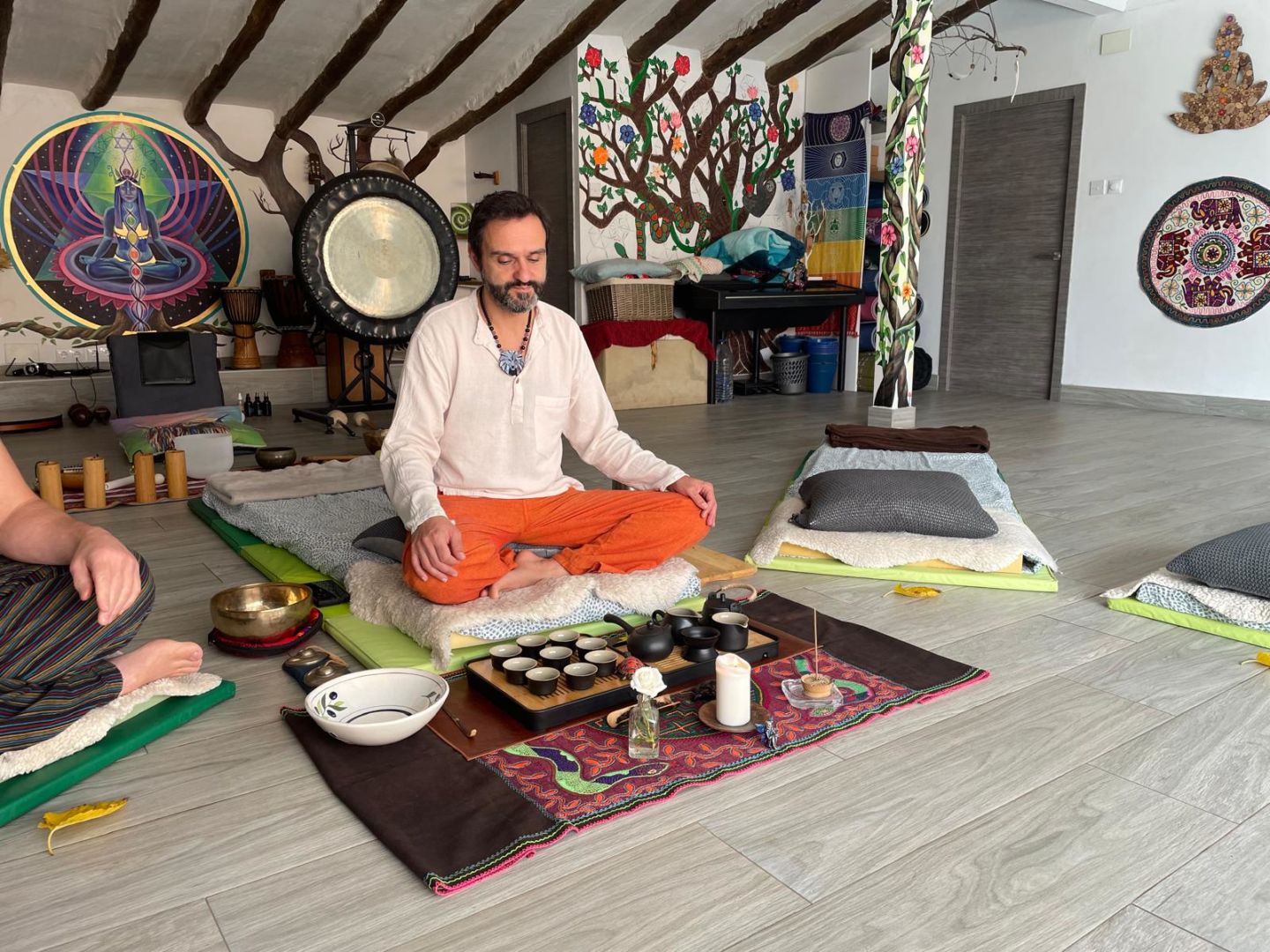
In a tea ceremony, we slow down enough to notice. The sound of water being poured. The warmth of the cup between our hands. The fragrance of the leaves. The first taste. The silence between one bowl and the next.
Nothing extraordinary needs to happen—and perhaps that is precisely the point.
For a little while, there is nowhere else to be and nothing else to achieve. We are invited to sit, breathe, receive and share the moment with those around us.
The tea becomes more than a drink. It becomes an anchor.
It brings us back into the body and into relationship: with ourselves, with the earth that grew the leaves and with the people sharing the space. Conversation may arise, but silence is equally welcome. We do not have to entertain one another or find the right words. We can simply be present together.
In a world where we are constantly communicating but rarely feel deeply met, this kind of attention is precious.
Lomi Lomi as a ritual of returning
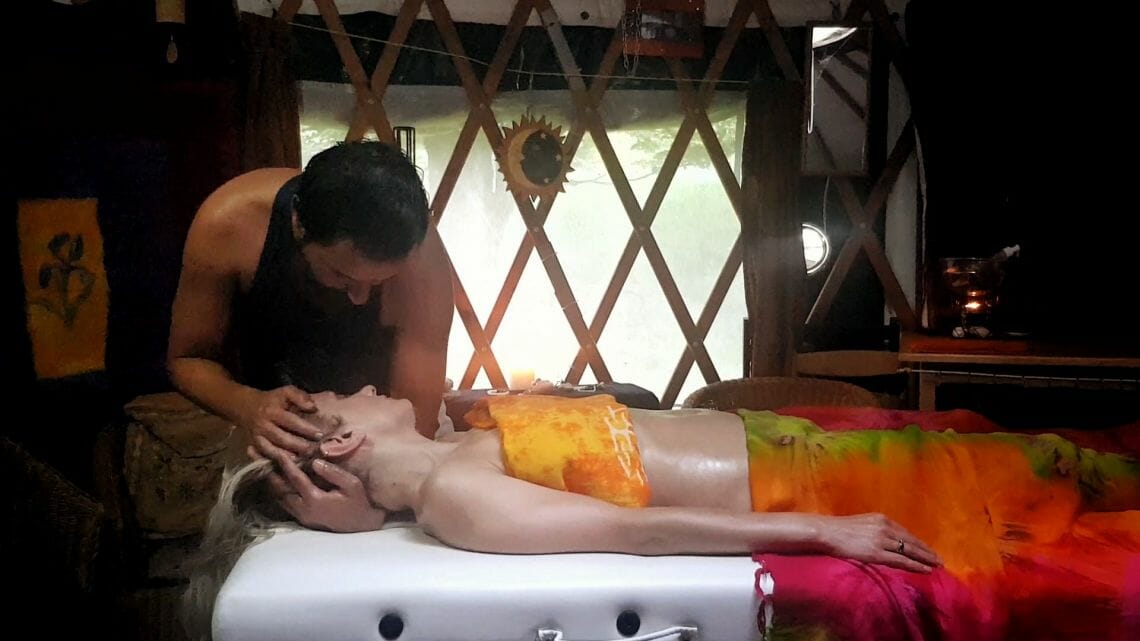
Lomi Lomi, too, can be much more than a massage.
The long, flowing movements invite the body to soften and the mind to loosen its grip. The rhythm gradually carries us away from constant thinking and back towards feeling. With time, care, breath and loving presence, the treatment becomes a ritual of returning—to the body, to the heart and to the quieter self beneath the noise.
We spend so much of our lives doing what is needed, carrying responsibilities and responding to the needs of others. Even rest can become something we try to perform correctly or fit efficiently into a busy schedule.
Lomi Lomi asks for something different.
It asks us to receive.
To stop holding everything together for a while.
To allow ourselves to be supported.
To listen to what the body has been trying to say.
To let the nervous system remember that it is safe to slow down.This is why the intention surrounding a treatment matters. The welcoming tea, the conversation, the moment of grounding, the touch offered with full attention and the quiet time afterwards are not unnecessary additions. Together, they create a threshold between ordinary life and a deeper experience of presence.
The ritual does not take us away from reality. It brings us more fully into it.
Being present for one another
Ritual is not only about reconnecting with ourselves. It also teaches us how to be present for another person.
True presence is increasingly rare. We listen while preparing our reply. We sit together while looking at separate screens. We ask how someone is but often have little time for the real answer.
To be present for someone is to offer something that cannot be purchased or hurried: our undivided attention.
This presence is at the heart of both tea ceremony and Lomi Lomi. One is shared through water, leaves and silence; the other through movement, touch and care. Yet beneath their different forms is the same message:
I am here. You matter. This moment is worthy of our attention.
Perhaps this is what makes ritual feel sacred. Not because it is supernatural, but because we choose not to treat the moment casually. We step out of habit and meet life consciously.
You do not need to wait for a special occasion
We often imagine that rituals belong only to the great transitions of life: births, weddings, deaths and anniversaries. But we also need small rituals that carry us through ordinary days.
A morning cup of tea enjoyed before opening the phone.
A few quiet breaths before entering the house.
A weekly meal shared with attention.
A walk taken without a destination.
A massage received not only when the body is in pain, but when the whole being needs space to breathe.The form matters less than the sincerity behind it.
A ritual can last an hour or only a few minutes. What matters is that, for that time, we arrive with our whole self. We place a small marker in the endless flow of life and say:
I am here. I am alive. I choose to be part of this moment.
We cannot stop time. But we can stop disappearing from our own lives.
Through tea, touch, breath and loving attention, we can create spaces where doing becomes less important than being—where silence is not empty, and where a simple moment can become deeply meaningful.
This is the invitation at the heart of both Lomi Lomi and tea ceremony: to slow down, to return to yourself and to remember how it feels to be truly present.
-
The Space Between: Finding Harmony Through Stillness
Have you ever noticed how uncomfortable we have become with doing nothing?
A few minutes waiting for the kettle to boil, and suddenly our phone is in our hand.
A quiet moment in the car, and we feel the need to fill it with music, messages, or endless scrolling.
Even rest has become something we try to improve.
“Relax better.”
“Sleep smarter.”
“Make the most of your free time.”Somewhere along the way, we turned simply being into another task on our never-ending list.
But perhaps we have forgotten something important:
The spaces between things are not empty.
They are where life happens.
In Italy, there is a beautiful expression:
Dolce far niente.
The sweetness of doing nothing.
Not laziness.
Not wasting time.
Not escaping from life.It is the art of enjoying a moment without asking what it is good for.
A slow afternoon in the sunshine.
A conversation that has nowhere to go.
A coffee enjoyed simply because it tastes good, not because it is keeping us awake for the next challenge.
The Italians understood something our busy minds often forget:
A moment does not need to achieve anything to be precious.
Japan has another way of seeing this.
A concept called Ma (間).
The appreciation of the space between things.
The pause between two notes that allows music to breathe.
The empty space in a painting that gives the image its meaning.
The silence between words that allows something deeper to be felt.
Without space, everything becomes noise.
And perhaps our lives need a little more Ma too.
A pause between thoughts.
A moment where we are not trying to fix, improve, or become something else.
A moment where we can simply return to ourselves.
In Daoist philosophy, there is another beautiful idea:
Wu Wei (無為).
Often translated as “non-action”.
But this does not mean doing nothing in the literal sense.
It does not mean laziness or passivity.
Wu Wei is about moving in harmony with the natural flow of life.
It is the art of acting without unnecessary force.
Like water flowing around a stone.
It does not fight the obstacle.
It does not become weak.
It simply finds the natural way forward.
Perhaps we spend too much of our lives pushing, forcing and trying to controll.
Perhaps sometimes the wisest action is to soften, listen and allow.
Maybe this is also why meditation has touched so many people around the world.
Not because we stop thinking. (Anyone who has tried meditation knows the mind does not simply pack its bags and leave for a holiday.)
Meditation is not about simply creating an empty mind.
It is about allowing space to arise.
A space between our thoughts.
A space where we can breathe and reconnect with our true self.
A space where we can simply be present.
My own journey into this quiet space began through Hawaiian Lomi Lomi massage.
At first, I was fascinated by the flowing movements, the connection with Hawaiian wisdom, and the beautiful philosophy of Aloha.
But over time, I discovered the deeper meaning of this beautiful ancient practice.
A truly present touch creates a space where nothing needs to be forced.
No pressure to perform.
No need to explain everything.
No need to be anything other than who you are in that moment.
The body softens.
The mind becomes quieter.
And sometimes, in this beautiful “nothing”, something very important and precious happens.
Later, I found another expression of this same quality through traditional Chinese tea ceremonies.
A cup of tea became much more than a drink.
The slow preparation.
The warmth of the cup.
The aroma of the leaves opening.
The changing taste with every infusion.
Nothing spectacular happens.
No fireworks.
No dramatic transformation.
And yet, somehow, everything changes.
The mind slows down.
The senses awaken.
A simple moment becomes enough.
Perhaps this is the forgotten art of our time.
Not doing less because we have given up.
But creating space because we value life.
The breath between moments.
The silence between words.
The pause between who we were and who we are becoming.
Because the space between things is not empty.
It is where harmony lives.
It is where we reconnect.
It is where life quietly unfolds.
And maybe this is the sweetest kind of “doing nothing”:
A moment where you do not have to achieve anything.
A moment where you are not fixing, planning, or rushing.
A moment where you can hold a safe space for yourself to be as you are…
or someone simply holds space for you to slow down and just be. Let it be.
If you feel called to experience this gentle art of slowing down, I would love to welcome you to a Lomi Lomi massage or a traditional tea ceremony.
I will create a safe and peaceful space where this beautiful “nothing” can become something…
Perhaps even everything you did not realise you were looking for.
-
Negative Thoughts — And the Space Around Them
We all have negative thoughts.
Fear, self-doubt, harsh self-criticism, anger we replay long after the moment has passed,
old stories about not being enough…The problem is not that these thoughts appear.
The problem is how quickly we believe them.In yoga philosophy, Patanjali describes the movements of the mind as vrittis — fluctuations. Thoughts are not solid truths. They are movements. Waves. Temporary formations.
The practice is not about stopping the waves.
It is about recognizing that we are not the wave.Modern psychology says something similar. Cognitive reframing is not about forcing positivity. It begins with one simple shift: “This is a thought, not a fact.” That small sentence creates distance. And in that distance, choice becomes possible.
Buddha’s teachings spoke about the mind in a very direct way. He taught that suffering deepens when we cling to thoughts or resist them. Through mindfulness, we learn to observe a thought simply as a thought — arising, existing for a moment, and passing away. Not something to grasp. Not something to fight. Just a mental event moving through awareness. When we see clearly that thoughts are impermanent, their power softens. What once felt solid becomes fluid.
Huna philosophy adds another layer: the world is what you think it is.
Not as a simplistic affirmation, but as a reminder — perception shapes experience. Where attention goes, energy follows. What we keep rehearsing internally becomes the lens through which we see.Across traditions, the message is consistent:
Thoughts are like clouds crossing the sky. Some are light and barely visible. Some feel dark and heavy. But the sky itself remains untouched.
A thought is an event. Not an identity.
And maybe the answer is not to “let go” of negative thoughts, as if we had to push them away.
Maybe it is to allow them.
To notice:
“There is fear.”
“There is self-judgment.”
“There is anger.”When we stop fighting a thought, it often softens on its own.
Like in family constellations — every member has a place in the system, even the one who carries shame or feels unwanted. When something is excluded, it becomes louder. When it is acknowledged, it relaxes.Negative thoughts often point toward something unresolved — an old wound, a protective strategy, a memory stored in the nervous system. If we meet them with curiosity instead of resistance, they lose their sharp edges.
Yoga — beyond the physical postures — offers a rich toolkit for this. Breath awareness, meditation, self-inquiry, ethical alignment. The asanas are important, yes. But yoga is much wider than movement. It is a way of relating to the mind.
When the body slows down and relaxes, the mind follows.
Sometimes this happens very simply. In quiet moments where breathing becomes steady. In the deliberate rhythm of preparing and sharing tea. In the warmth of touch when muscles begin to soften and the nervous system remembers safety. You can almost feel the shift — the story that felt urgent a moment ago loosens its grip. The inner dialogue fades into the background. When we pause for only a few moments, something very special is happening. We feel we arrived home -we’ve never left this place, but maybe never felt before- you are home. In your body, in your life, in this moment.
And in that grounded presence, thoughts — both “positive” and “negative” — move more freely. They come. They pass. Like wind through tall grass. Like clouds changing shape.
During a massage, when the body begins to feel safe, the mind quiets without effort.
In a tea ceremony, when we slow down enough to truly taste and just breathe consciously…
when we slow down enough to feel the simple act of holding a cup. Sensation interrupts mental repetition, the inner narrative softens. Nothing is forced. Nothing is suppressed. The system simply shifts.
When the body feels safe and grounded in the present, thoughts — both “positive” and “negative” — become less gripping.
And this shift does not belong to one method.
Yoga -on the mat and far beyond.
Qi Gong.
Meditation.
Breathwork.
Walking in nature as the days grow lighter.
Natural therapies.
Rituals.
Conscious Touch…All of them can help to create more space.
And in that space, what once felt heavy can become integrated.
What felt harsh can become understood.
What felt negative can transform into guidance.The focus is not on becoming endlessly positive.
It is on becoming more loving with what arises.There are many doors you can walk through. The secret is you don’t need to go anywhere. You are here already and it is only now, when you can recognise this.
There is always time to pause for a moment and just be as you are. Without rating or judging. Just witnessing…
If you often feel lost in the density of your own thoughts,
and sense that you need a little more space… a little more peace… and you still don’t know how to do it… you know how to reach me.I won’t solve your problems. I can share how I meet my own.
And perhaps, in that shared, safe space, you may find inspiration for how to gently untangle yours.And it may even happen that, for a moment, you realize they were never problems to begin with – only signposts guiding you back home.
Back to yourself.
Back to Wholeness.
This photo was taken at the Buddha Eden Garden of Peace in Portugal, during our wonderful Yoga Teacher Training graduation ceremony in 2022. 🌿

-
Osho Quote – Massage, The Forgotten Language
“Massage is something that you can start learning but you never finish. It goes on and on; and the experience becomes continuously deeper and deeper, and higher and higher. Massage is one of the subtlest arts. And it is not only a question of expertise, it is more a question of love.
First learn the technique; then forget it. Then just feel and move by feeling. When you learn deeply, ninety percent of the work is done by love, ten percent by the technique. By just the very touch, a loving touch, something relaxes in the body.
If you love and feel compassion for the other person, and feel the ultimate value of him; if you don’t treat him as if he is a mechanism to be put right, but an energy of tremendous value; if you are grateful that he trusts you and allows you to play with his energy — then by and by, you will feel as if you are playing on an organ. The whole body becomes the keys of the organ, and you can feel that a harmony is created inside the body. Not only will the person be helped, but you also.
Massage is needed in the world because Love has disappeared. Once the very touch of lovers was enough. A mother touched the child, played with his body, and it was massage. The husband played with the body of his woman and it was massage; it was enough, more than enough. It was deep relaxation and part of love.
But that has disappeared from the world. By and by, we have forgotten where to touch, how to touch, how deep to touch. In fact, touch is one of the most forgotten languages. …
… So be prayerful. When you touch the body of a person be prayerful — as if God himself is there, and you are just serving him. Flow with total energy. And whenever you see the body flowing and the energy creating a new pattern of harmony, you will feel a delight that you have never felt before; you will fall into deep meditation.
While massaging, just massage. Don’t think of other things, because those are distractions. Be in your fingers and your hands as if your whole being, your whole soul is there. Don’t let it be just a touch of the body. Your whole soul enters into the body of the other, penetrates it, relaxes the deepest complexes.
And make it a play. Don’t do it as a job; make it a game, and take it as fun. Laugh… and let the other laugh too. Soon you will be helping many people.”
Osho (Hammer on the Rock Ch #18, a darshan diary)
-
Time-travel
I was out of breath by the time I reached the top of the hill where I usually take a little rest during my morning jog. As I looked back at the lake from above -where a few minutes ago I was running- a strange feeling overwhelmed me. I was just standing there, with eyes closed because the sun was already shining brightly from over the opposite ridge and I was just watching this familiar feeling which was filling me up from top to toe.
It wasn’t familiar because I have been stopping here almost every day recently, but because a picture of another distant hillside flashed in my mind on this hilltop this morning. Another hilltop, in a remote country where I often used to stand in the same way.
As I was standing on top of the hill in the same way and to see better what was invisible to the eye. I closed my eyes as I had done before and more and more pictures came, of more hills and of more valleys, lakes and mountains where I had already stood and where I had felt the sparkling freshness of life.
I was present in each and every one of the places where previously I had managed to stop time … the same Sun was shining on me as it had so many times during my life… the same wind was soothing my skin … the same air filled up my lungs which also fills the lungs of all sentient beings since the beginning of time on this earth.
It was interesting to experience the permanence and the permanent change at the same time. Because just as I can’t enter the same river twice and I change from moment to moment, we still have a part of us which is shared, and which is eternal and timeless. Or perhaps it is more accurate if I say that we are part of -or we have a part in- the eternal immutability.
And this duality, both permanence and impermanence -although apparently opposite- complement each other to form a unity.
It is an uplifting experience. As I stand on so many hills and in so many valleys at the same time, in the liveliness of the present … and I just feel how my tears are running down my face from under my closed eyelids … and the wind unites with the sun to dry my tears and take them to all the places where I have stood and to all the places where I will stand in the future … over time and space … right here and now.
What a wonderful world it is … and how wonderful it is that we are part of this miracle – and this miracle is a part of us.
Blessing